Boutique vs Big-Firm Personal Injury Representation in Manhattan: Which Is Right for You?
If you were injured in Manhattan, the choice between a boutique personal injury firm and a high-volume firm with regional television advertising is the most consequential decision you will make about your case. Both models can recover compensation. They are structured differently, and the structural differences affect the day-to-day reality of being a client, the strategy applied to your case, and in some cases the outcome at settlement or trial.
This guide is built to help you decide which model fits your specific situation. There are real Manhattan personal injury cases where a boutique firm is the better fit, and there are real cases where a high-volume firm or a large multi-state practice is the better fit. The honest answer depends on the type of case, your communication preferences, and the kind of representation you want during a recovery that can last months or years.
Defining the Two Models
What “Boutique” Means in Manhattan Personal Injury
A boutique Manhattan personal injury firm is a small practice, typically led by a single named attorney or a small partnership, that handles a deliberately limited caseload. The defining feature is direct client access to the attorney handling the case. Clients reach the attorney by phone, often by cell, and the attorney is personally involved in the medical record review, deposition preparation, settlement negotiation, and trial if the case proceeds. Boutique firms compete on case attention rather than volume, and their case acceptance is selective. They are not built to handle every case that walks in the door.
What “Big-Firm” Means in Manhattan Personal Injury
A high-volume Manhattan personal injury firm is a larger practice with a substantial caseload, often supported by significant television, subway, and digital advertising. Cases enter through a call-center intake operation staffed by non-attorneys, then route to an attorney with available bandwidth. Case management is typically distributed across associates, paralegals, and case managers, with the named attorney on the advertising involved at limited points or not at all. These firms compete on visibility, scale, and the ability to absorb a large case pipeline. The structure makes economic sense at scale and produces real recoveries, but the client experience is materially different from a boutique practice.
Side-by-Side Comparison
The table below compares the two models across seven dimensions that typically affect Manhattan personal injury clients.
| Dimension | Boutique Manhattan PI Firm | High-Volume Big Firm |
| Attorney Access | Named attorney handles the file directly; clients reach them by phone, email, often cell. | Mostly case managers, paralegals, or rotating associates. The TV-ad attorney is rarely involved. |
| Case Volume per Attorney | Limited caseload, so each case gets individual attention. | High caseload, run on a settlement-mill model that favors throughput over strategy. |
| Intake Style | Direct attorney conversation, usually within 24 hours. Cases accepted selectively by fit and merit. | Non-attorney call-center intake. Cases routed by bandwidth, with little case-type matching. |
| Advertising Spend | Minimal; growth comes from referrals and client outcomes. | Heavy TV, subway, billboard, and digital spend, requiring high volume to recoup. |
| Settlement Strategy | Built around the client’s specific medical, financial, and personal facts. Trial is genuinely on the table. | Settlement-oriented by design. Most cases resolve through volume negotiation, not trial prep. |
| Communication Cadence | Direct attorney updates at key case events; the handling attorney answers questions. | Updates from case managers or paralegals, with slower responses on lower-value cases. |
| Fee Structure | Standard NY contingency fee. No fee unless the case recovers. | Standard NY contingency fee. No fee unless the case recovers. |
What Each Model Does Well
Where Boutique Representation Performs Best
Boutique firms perform best on cases where individualized attention and direct attorney communication drive outcomes. The categories where this matters most include construction accident cases under New York Labor Law §240(1) and §241(6), pedestrian and bicycle cases in dense Manhattan corridors, premises liability cases against landlords and management companies, and crime-victim and negligent security cases where the legal theory turns on what the property owner knew or should have known.
These case types reward attorneys who handle the case personally, review the file repeatedly, and prepare the matter for trial even when settlement is the likely outcome. A boutique attorney can do this at the level required because the caseload is small enough to permit it.
Where Big-Firm Representation Performs Best
High-volume and large multi-state firms perform best on cases where firm infrastructure, scale, and specialized practice groups create real value. Mass torts, multi-district pharmaceutical litigation, large class actions, complex multi-state coordination, and highly specialized medical malpractice subspecialties often benefit from the resources a large firm brings. A genuinely catastrophic injury requiring lifelong care and a specialized firm with deep experience in that exact injury type may also outperform a generalist boutique on the specific case.
The shorthand is that big firms perform best when the case is large enough and specialized enough that the firm’s infrastructure becomes an asset rather than a layer of separation between the client and the attorney.
The Tradeoffs of Each Model
Tradeoffs of Boutique Representation
The structural limit of the boutique model is capacity. A boutique attorney handles a limited number of cases at one time, which means the firm cannot absorb every Manhattan injury case that comes in. If a case falls outside the firm’s practice areas, the boutique firm should refer the matter to a colleague rather than take it on. Boutique firms also lack the dedicated class-action and multi-district litigation infrastructure that some catastrophic cases require, and they cannot fund the kind of advertising that drives high inbound volume.
Tradeoffs of High-Volume Representation
The structural limit of the high-volume model is client experience. The economics of the model require high case volume per attorney, which constrains the time any one attorney can spend on any one case. Clients often communicate with case managers and paralegals rather than the attorney, and updates can lag for cases with smaller projected recoveries. The settlement orientation of the model is rational at scale but can leave individual cases undervalued when the client would be better served by a more aggressive litigation posture. Television and subway advertising costs are real, and the firm must keep its case pipeline full to recover them.
Which Model Is Right for You: A Decision Guide
The table below maps common Manhattan personal injury scenarios to the better-fit representation model. These are general guides; the specific facts of your case may shift the analysis.
| Your Situation | Better Fit | Why |
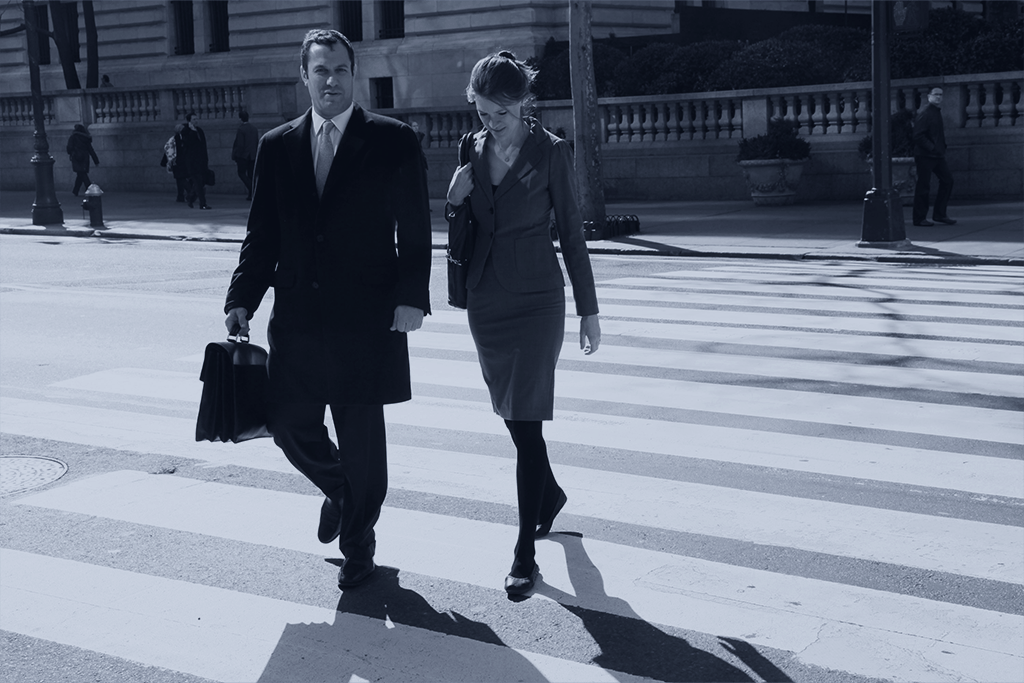
| Struck as a pedestrian in a Manhattan crosswalk; want priority handling, not a case number. | Boutique | Turns on intersection facts, camera footage, and fast witness work. A boutique attorney handling the file personally can move quickly and prep for trial if the insurer lowballs. |
| Pharmaceutical mass tort or class action with thousands of co-plaintiffs. | Big Firm | Managing thousands of plaintiffs, MDL coordination, and document review at scale is what big firms are built for. A boutique should refer it. |
| Construction worker injured on a Manhattan site under Labor Law §240(1) or §241(6). | Boutique | Document-intensive cases that hinge on framing owner and contractor liability. A boutique can build the record properly; a high-volume firm may push for a quick settlement. |
| Catastrophic injury needing lifelong care, with a specialized medical or product-liability question. | Depends | Comes down to specialization, not size. Whoever has deep experience in your specific injury type wins, boutique or big. |
| Want direct attorney communication, regular updates, and named-partner handling throughout. | Boutique | The core strength of the boutique model. High-volume firms aren’t built to deliver named-attorney access at scale. |
| Multi-state class action needing nationwide co-counsel coordination. | Big Firm | Requires firm infrastructure, cross-state co-counsel, and dedicated class-action staffing boutiques usually lack. |
About the Law Offices of Eric Richman
The Law Offices of Eric Richman is a boutique Manhattan personal injury practice. The firm is structured around individualized case attention rather than high-volume intake. Clients communicate directly with Eric Richman, including by cell phone, throughout their case. The practice handles construction accidents under New York Labor Law §240(1) and §241(6), pedestrian and bicycle accidents, premises liability, negligent security, crime-victim cases, and wrongful death matters.
Documented results include a $2.25 million construction accident settlement, a $1.5 million pedestrian crosswalk settlement, a $1.5 million negligent security settlement on behalf of the family of a homicide victim, and a $1.1 million pedestrian crosswalk recovery. The firm accepts Spanish-language intake.
Location: 641 Lexington Avenue, 14th Floor, New York, NY 10022
Client Access: Direct cell phone access to Eric Richman throughout the case
Languages: English, Spanish-language intake available
Experience: Over 25 years representing New York personal injury victims
If you need legal guidance or would like to discuss your case, contact Eric Richman at (212) 688-3965 for a free consultation.
FAQ
Do boutique and big-firm Manhattan personal injury attorneys charge different fees?
No. Both models work on a standard New York contingency fee, which means the firm is paid only if the case recovers compensation. The contingency percentage is set by court rule and does not vary based on firm size.
Does a boutique firm have the resources to take a case to trial?
Yes. A boutique firm with experienced personal injury trial counsel can and does take cases to trial in New York County Supreme Court. The constraint is caseload, not capability. A boutique attorney handling a limited number of cases can prepare each one for trial, which often produces stronger settlement leverage than a high-volume firm pursuing a settlement-mill approach.
If the boutique firm refers my case out, what happens?
Reputable boutique firms refer cases that fall outside their practice areas or scale to other qualified attorneys. The client is informed of the referral, signs new representation paperwork, and continues under the new firm. The original boutique firm does not retain any role in the case unless explicitly agreed otherwise.
How do I tell whether a Manhattan personal injury firm is genuinely boutique?
Ask who will handle the case day-to-day. Ask whether you will have the attorney’s direct phone number. Ask how many cases the attorney handles at one time. Ask whether the attorney has tried personal injury cases in New York County Supreme Court within the last several years. The answers reveal whether the firm operates on the boutique model or simply markets itself that way.
Does the Law Offices of Eric Richman take cases in Spanish?
The firm accepts Spanish-language intake. Spanish-language consultations are available.
About This Guide
This guide was produced in May 2026 as a neutral comparison resource for Manhattan personal injury clients evaluating boutique and high-volume firm representation. It draws on publicly available information about the personal injury practice models common in New York, court rules governing contingency fees, and the operational structures of personal injury firms operating in Manhattan. It is for informational purposes only and does not constitute legal advice. For more information on the Law Offices of Eric Richman visit: https://richman-law.com/.